
When Students Understand the Language of Learning: Moving Towards Assessment-Capable Learners
What does it really mean for students to be assessment-capable — and how often do we see it truly happening in classrooms?
Recently, I had the opportunity to work with the team at Jakarta Intercultural School exploring this very question. It’s a phrase we hear often. It sounds powerful. But when we pause and unpack it, it asks quite a lot of both educators and learners.
Being assessment-capable is not about students completing a task or receiving feedback.
It is about students understanding their learning.
What is an Assessment-Capable Learner?
Frey, Fisher, and Hattie (2018) describe an assessment-capable learner as a student who:
• Is aware of their current level of understanding
• Understands their learning path and is confident enough to take on a challenge
• Can select tools and resources to guide their learning
• Seeks feedback and recognises that errors are opportunities to learn
• Monitors their own progress and adjusts course as needed
Beyond Doing… Towards Understanding
For students to become assessment-capable, they need to know:
• what they are learning
• what success looks like
• how they can demonstrate that understanding
Without this clarity, assessment remains something that is done to students.
As Absolum (2006) suggests, for students to take responsibility for their learning, both teacher and students must be clear about what is being learned and how.
Without this clarity, students cannot act on their learning, they can only comply with it.
The Power of Command Terms
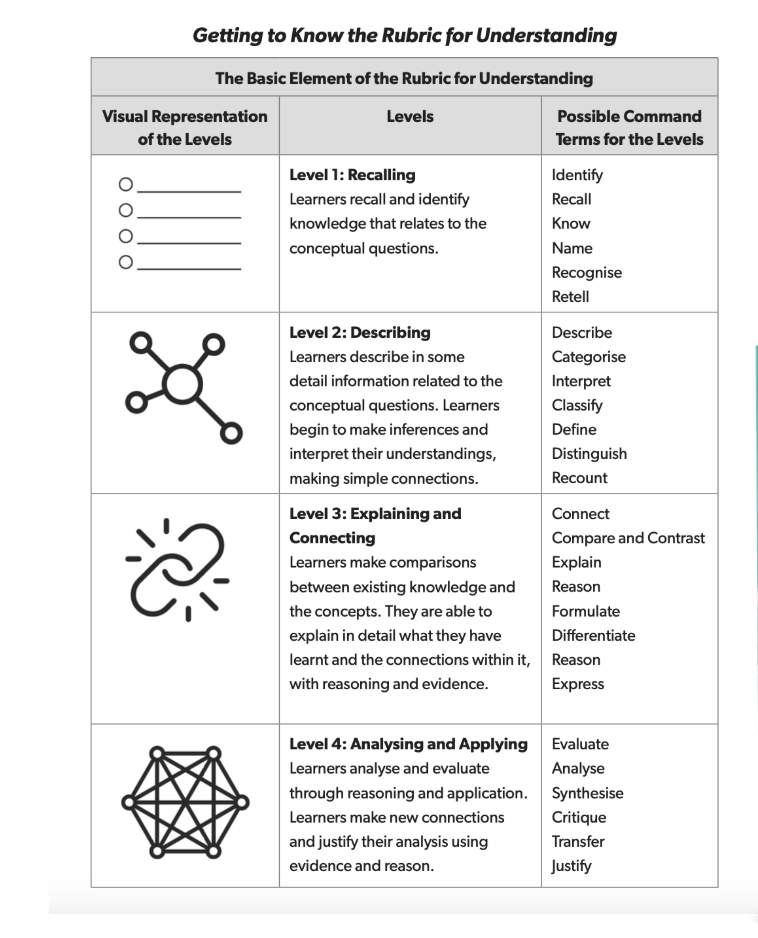
From Leveraging Deep Learning: Strategies and Tools for Assessment of Conceptual Understanding p. 40
At first glance, command terms can feel like simple instructional language: identify, describe, explain, analyse.
But they become something much more significant.
They are the language of thinking.
When students understand the difference between identifying and describing, explaining and connecting, analysing and applying, they begin to see that learning is a progression.
A movement from surface to deep. From knowing to understanding.
When Language Creates Agency
Students cannot become assessment-capable if they do not understand the language of learning.
If a student is asked to explain but thinks it means to describe, they are not demonstrating a lack of conceptual understanding, they are navigating a lack of clarity in expectations.
When we unpack command terms with students, co-construct meaning, and revisit them across contexts, we build shared understanding.
And with that comes agency.
From Practice: Kardinia International College
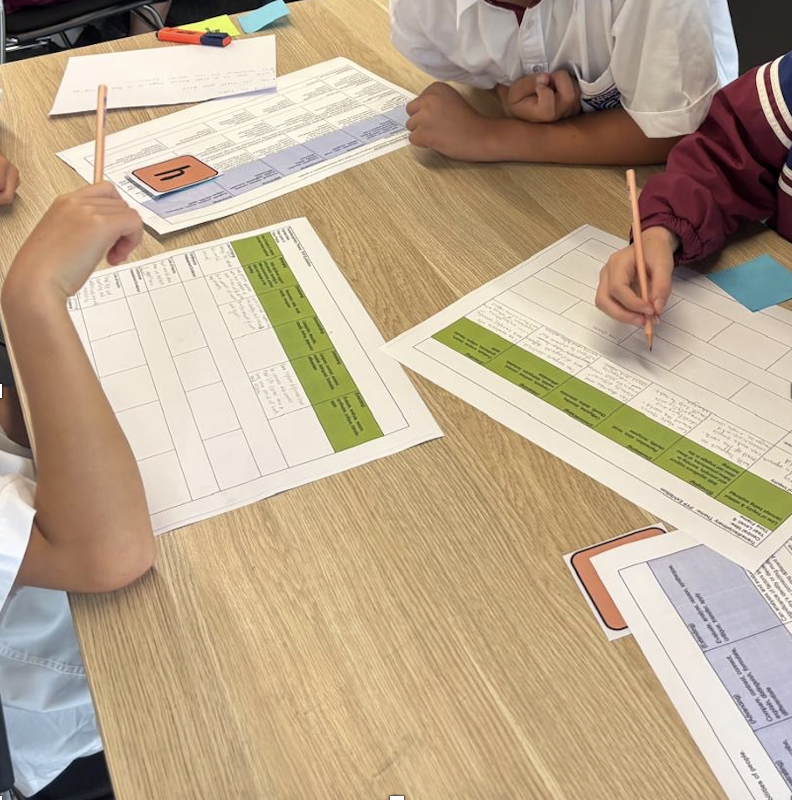
Students at Kardinia International College co-designing a rubric for understanding—shifting from compliance to ownership
At Kardinia International College, where I have worked in partnership over three years, this shift is now embedded.
Students co-design rubrics, and the language of learning permeates the school.
As a result, students not only understand what success looks like, they actively participate in shaping and assessing it.
Making Learning Visible
Once students understand the language of learning, the next step is making that language visible.
This can look like:
• anchor charts unpacking command terms
• examples of work at different levels
• opportunities to compare and discuss
• ongoing conversations about quality
When students can see and talk about these differences, they begin to internalise them.
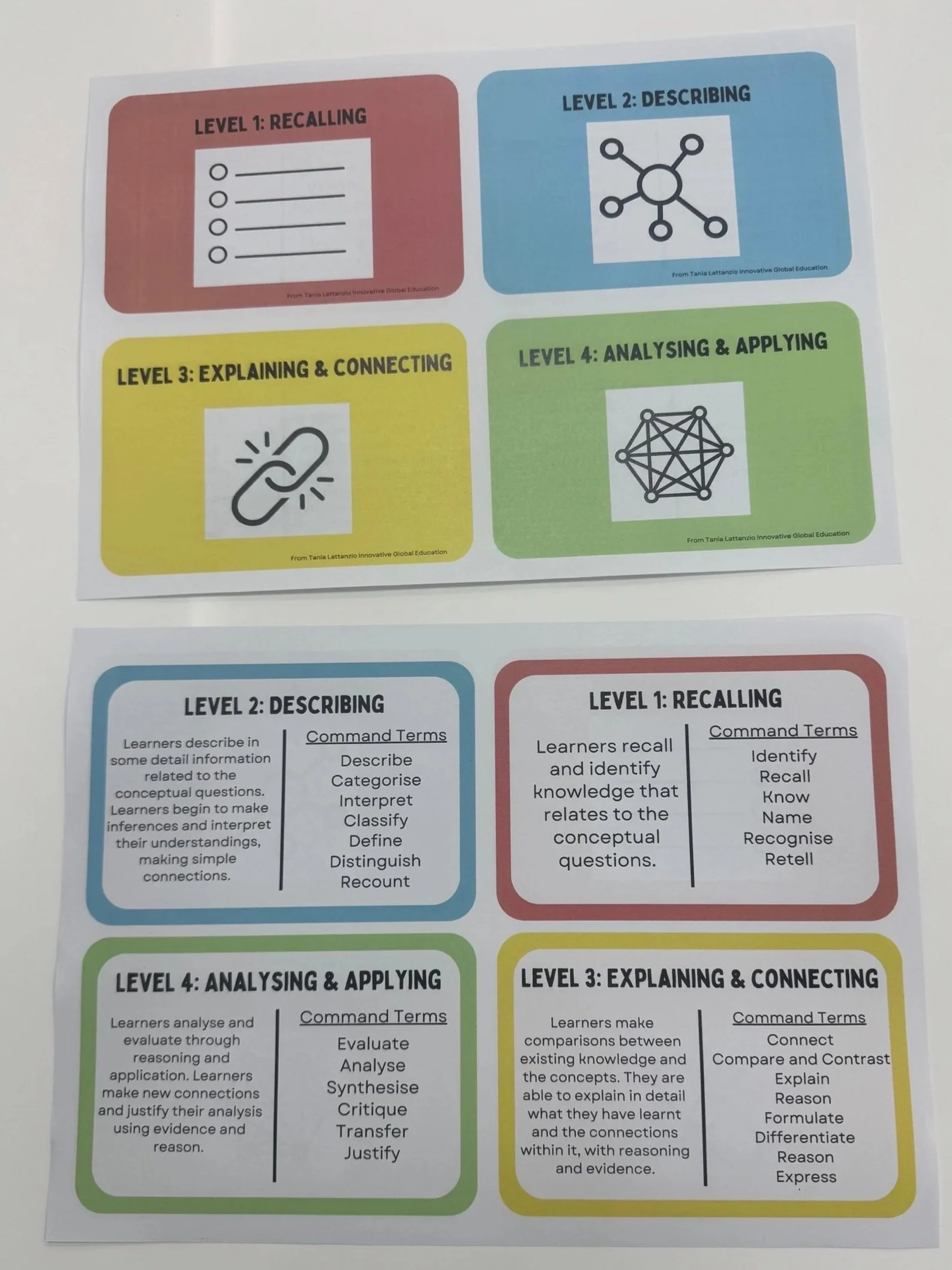
Making command terms visible: Jakarta Intercultural School
From Assessment as Event… to Assessment as Process
Assessment is no longer a final task or grade.
It becomes:
• ongoing
• visible
• co-constructed
• used by students to inform next steps
This shift requires intentional planning, consistency, and shared language—but the impact is significant.
This is where assessment shifts from something we capture… to something students continuously build.
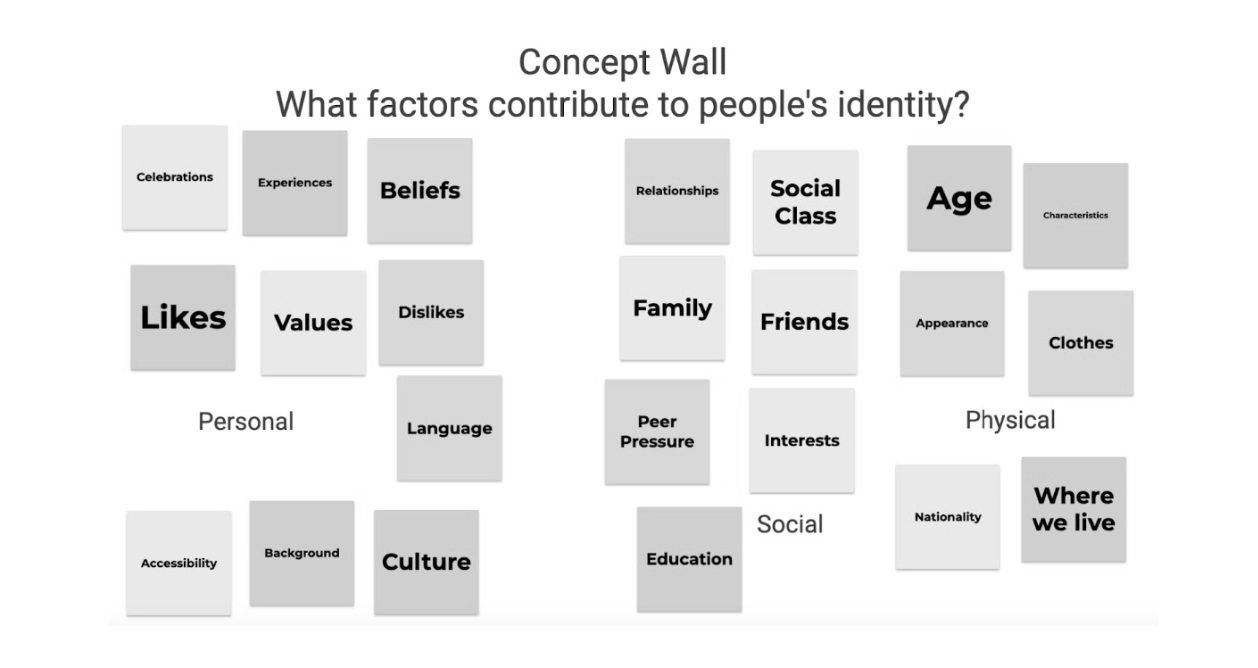
A concept wall, where throughout the learning students continually add their ideas connected to the understanding question. As ideas are added students make connections and look for patterns, building their conceptual understanding.
From Leveraging Deep Learning: Strategies and Tools for Assessment of Conceptual Understanding, p. 163
Try This in Your Classroom
These shifts do not happen all at once. They are built through intentional, consistent practices and shared understanding.
• Take one command term and unpack it with students
• Co-construct what it looks like at different levels
• Revisit it across multiple lessons
Watch what happens to the quality of student thinking—and ownership.
A Final Reflection
When learning becomes visible, it becomes understandable.
And when it becomes understandable, it becomes actionable.
And that… is where assessment-capable learners begin.
Continue the Learning
Much of this thinking continues to evolve through my work with schools and is captured in my book, Leveraging Deep Learning: Strategies and Tools for Assessment of Conceptual Understanding, where I share practical strategies and tools to support:
designing for conceptual understanding
making learning visible
developing assessment-capable learners
using continuous assessment to inform teaching and learning
The book is grounded in classroom practice and designed to support educators in moving from assessment as an event… to assessment as an ongoing, meaningful process.
You can learn more or purchase the book here:
https://elevatebooksedu.com/leveraging-deep-learning
Collaborations:
If you are looking to deepen this work within your school or system, I offer professional learning that supports:
inquiry-based and concept-driven curriculum design
assessment of conceptual understanding
developing assessment-capable learners
building consistent practices across teams and schools
This work can take many forms, including:
workshops and keynote sessions
in-class coaching and modelling
collaborative unit and assessment design
Ongoing partnerships to support sustainable change
Each engagement is tailored to the context of the school, with a focus on building clarity, consistency, and impact across classrooms.
If you are interested in exploring how this thinking could be developed within your context, please feel free to get in touch:
Contact me at:
tania@innovativeglobaled.org