
What Are Students Going to Do With Their Learning?
Tina Blythe (1998) reminds us that understanding is:
“a matter of being able to do a variety of thought-demanding things with a topic.”
Students should not merely learn about something. They should do something with their learning.
Too often assessment is viewed as the end point of learning. Students complete a unit, sit a test, create a presentation, submit a project, and the learning is considered complete.
But what if we viewed assessment differently?
What if the most important question was not:
"What have students learned?"
but rather:
"What are students going to do with what they have learned?"
This shift sits at the centre of the work Andrea Müller and I explore in Leveraging Deep Learning: Strategies and Tools for Continuous Assessment of Conceptual Understanding.
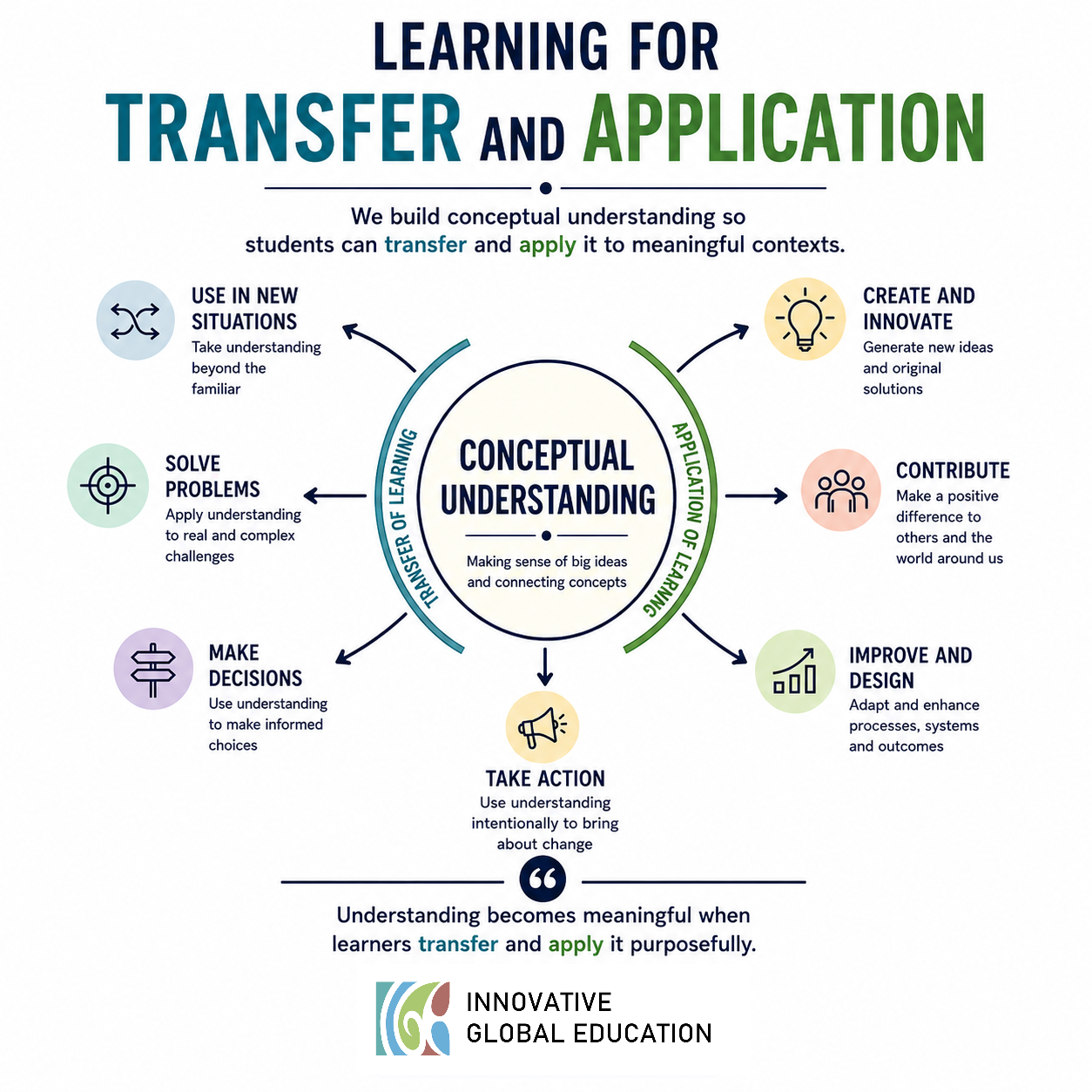
Rather than focusing on summative assessment as the final destination, we propose a shift towards Transfer and Application. This change in language is more than semantics. It reflects a fundamental change in purpose.
The goal of learning is not simply to acquire information.
The goal is to use understanding in ways that matter.
Moving Beyond the End Product
As Grant Wiggins and Jay McTighe (2005) remind us:
“The ability to transfer learning is the ultimate aim of education.”
Yet too often assessment focuses on what students can recall rather than what they can do with their understanding. Traditionally, assessment often occurs at the end of a unit. Students demonstrate what they know and have learned.
Transfer and application require a different way of thinking.
Instead of asking learners to reproduce what was learnt we create opportunities for them to apply their understanding in authentic contexts either at the end of learning or throughout the learning process.
The emphasis moves from:
“What did you learn?”
to
“How can you use your learning?”
This shift recognises that understanding becomes visible when learners can transfer ideas to new situations, unfamiliar contexts, and real-world challenges.
Understanding is revealed when learners can make decisions, solve problems, create solutions, explain their thinking, and act on what they know.
Importantly, transfer and application are not simply about completing another task. They are about using understanding in purposeful ways.
The Power of the "So What?"
As Lynn Erickson (2007) argues, conceptual understanding enables learners to transfer knowledge across time, place, and situation.
One of the most important questions we can ask when designing learning is:
“So what?”
It sounds simple, yet it is often the question that transforms a unit from interesting to meaningful.
If students spend weeks learning about ecosystems, communication, identity, systems, innovation, or change, eventually they should be able to answer:
"Now that I know this, what can I do with it?"
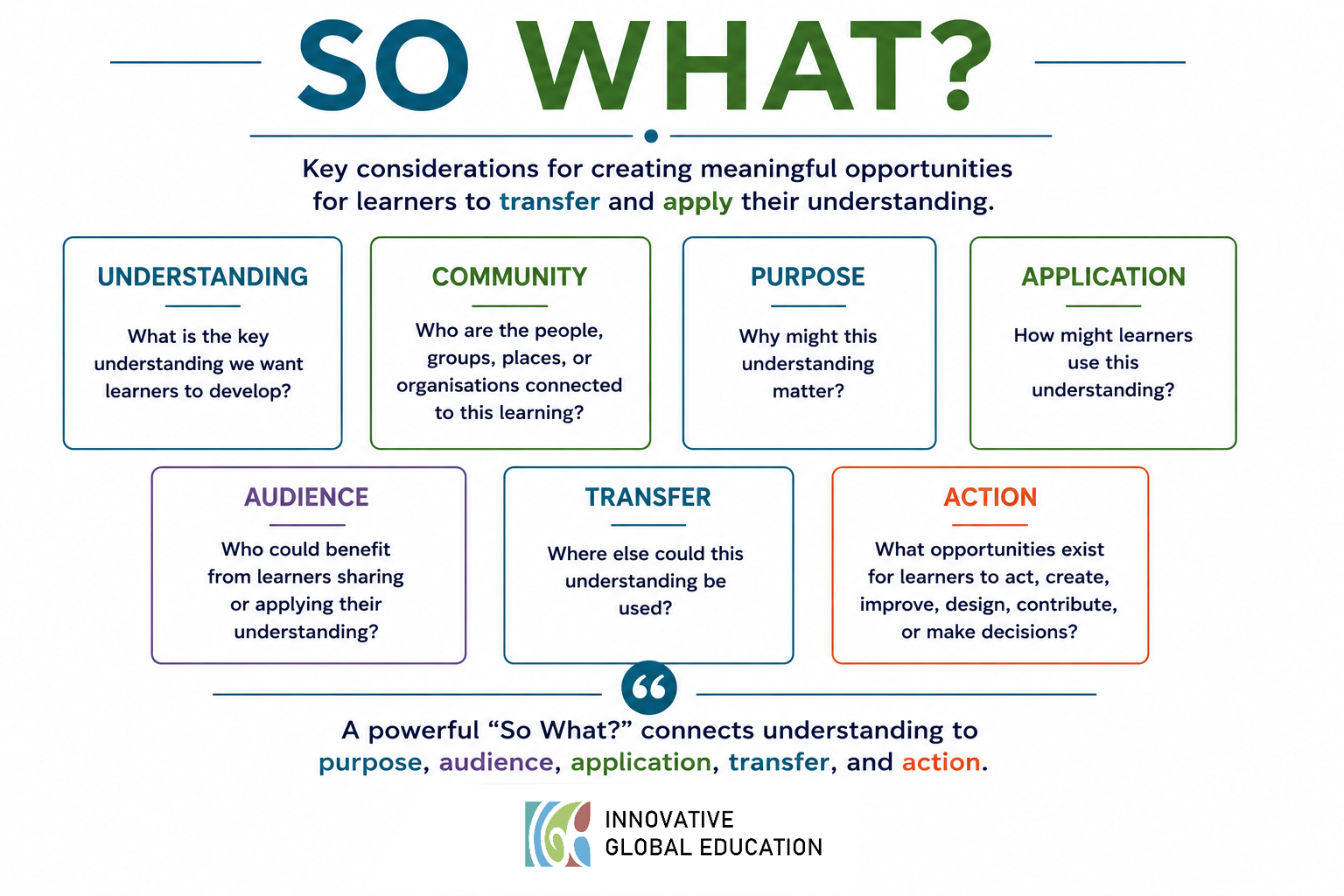
The "So What?" question helps learners connect their understanding to a broader purpose.
It asks:
Why does this matter?
How is this relevant?
Who could benefit from this understanding?
How might I use this learning to contribute?
If we cannot answer the "So What?" question, then it may be worth reconsidering why the learning is taking place in the first place.
The "So What?" question should be visible to learners. It communicates that the expectation is not simply to learn about something, but to use understanding in meaningful ways.
For example:
How can I contribute to the sustainability of my community?
How can I promote a sense of wellbeing for myself and others?
How can I use my understanding of forces to solve problems?
How can I curate historical sources to tell a story of the past?
How can we use scale and proportion to create opportunities for play?
How can we adapt games so younger students can successfully participate?
These questions signal that learning is heading somewhere.
They communicate to learners that understanding should lead to contribution, action, decision-making, creativity, and purpose.
Learning That Extends Beyond the Classroom
One of the most powerful aspects of transfer and application is its ability to connect learning to communities.
When students see opportunities to use their understanding beyond the classroom, learning can take on a new level of significance.
Consider the difference between:
Learning about environmental sustainability
and
Designing solutions that promote sustainability within the school community.
Or:
Learning about communication
and
Creating resources that help new students feel welcomed and included.
Or:
Learning about wellbeing
and
Organising initiatives that promote wellbeing within the wider community.
In these situations, students are not merely demonstrating understanding.
They are using understanding.
The learning becomes authentic because it is purposeful.
Equally important is the presence of a real audience.
Often, students create work that is viewed only by their peers and the teacher.
A real audience might be younger students, parents, community organisations, school leaders, local experts, or members of the wider community. A real audience gives learning purpose beyond the teacher.
When students know their learning has the potential to inform, support, improve, or influence others, the work often becomes more purposeful and meaningful.
Action Does Not Need to Be Huge
When educators hear the word action, there can sometimes be an assumption that every unit requires a major project or large-scale community initiative.
It does not.
Meaningful action can be small.
It may involve:
helping another learner
creating a resource for a younger class
making recommendations for improvement
changing a personal habit based on new understanding
contributing an idea that benefits the community
The size of the action is not what matters.
What matters is that learners use their understanding in a purposeful way.
Some of the most meaningful examples of transfer and application occur when students recognise that they can make a positive difference to themselves and to the people and places immediately around them.
Transfer and application are important, but perhaps the ultimate goal is contribution.
When learners use their understanding to improve something, support others, solve a problem, share a perspective, or make a positive difference within their community, learning moves beyond application.
It becomes contribution.
Students begin to see themselves not simply as recipients of knowledge but as people who can use their understanding to influence, improve, and shape the world around them.
A Final Reflection
Perhaps one of the greatest measures of successful learning is not what students remember when the unit finishes.
It is what they choose to do because of what they understand.
When learning leads to contribution, action, creativity, problem solving, or positive change, understanding becomes visible.
Students begin to see themselves not simply as consumers of knowledge but as people capable of using their learning in meaningful ways.
Perhaps that is one of the most important outcomes of education: helping learners recognise that what they understand can be used to contribute to the world around them.
Students begin to see themselves not simply as consumers of knowledge but as people capable of using their learning in meaningful ways.
References
Blythe, T. (1998). The Teaching for Understanding Guide. San Francisco, CA: Jossey-Bass.
Erickson, H. L. (2007). Concept-Based Curriculum and Instruction for the Thinking Classroom. Thousand Oaks, CA: Corwin Press.
Wiggins, G., & McTighe, J. (2005). Understanding by Design (Expanded 2nd ed.). Alexandria, VA: ASCD.
Further Reading & Professional Learning
If you found this conversation around curiosity, inquiry, and conceptual understanding helpful, I highly recommend exploring our book:
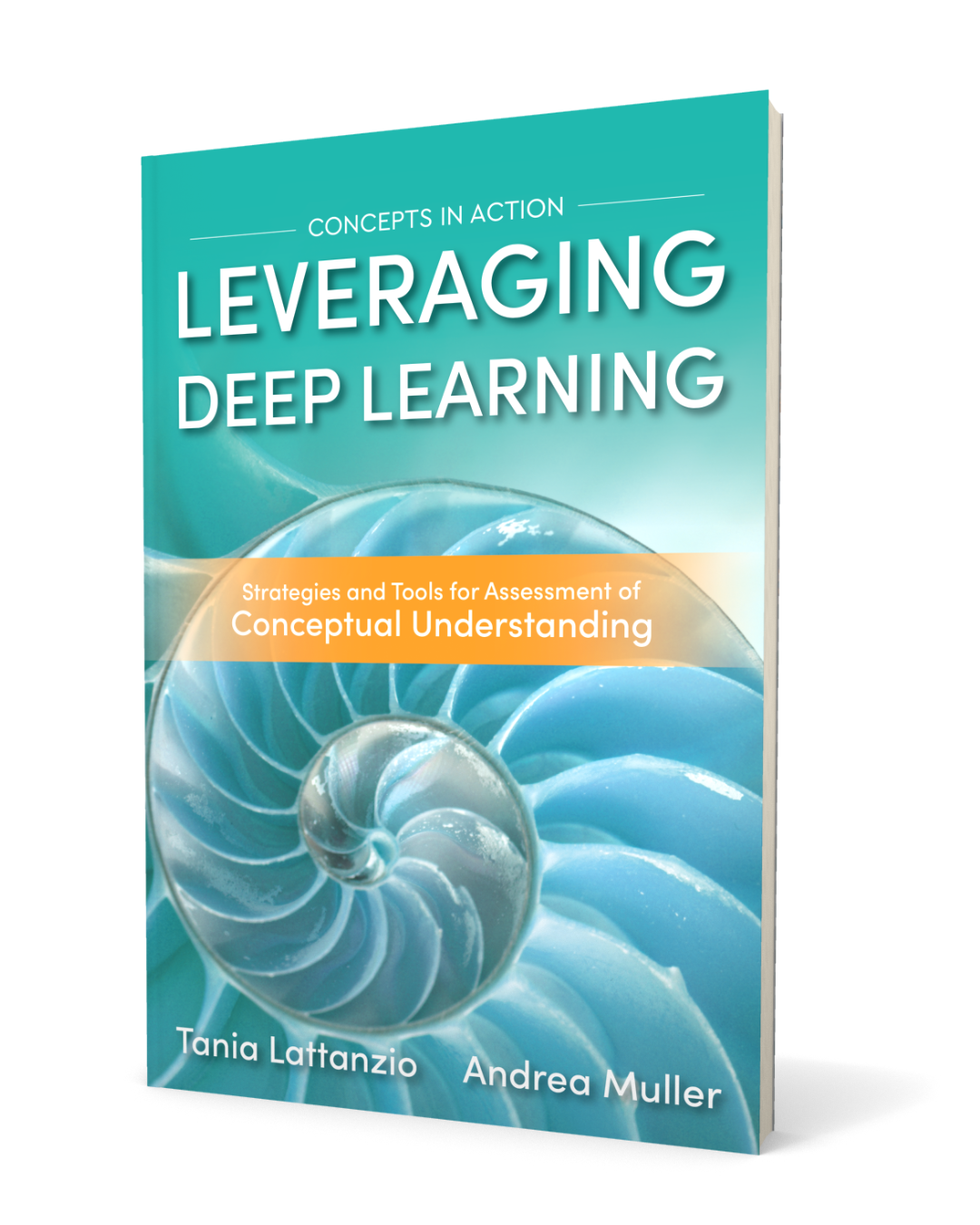
Leveraging Deep Learning: Strategies and Tools for Assessment of Conceptual Understanding - A thoughtful resource for educators looking to move beyond surface-level engagement and design learning experiences that foster deeper thinking, transfer, and meaning-making.
You can also explore more articles, latest workshops, consulting services, and professional learning opportunities through Innovative Global Education:
Visit our website: https://www.innovativeglobaled.org
Get in touch: info@innovativeglobaled.org
Subscribe to our newsletter to stay connected with future reflections and resources on inquiry, learning design, student agency, and more.