
Developing Assessment-Capable Learners
In a previous article, I explored how understanding the language of learning provides an important foundation for developing assessment-capable learners. Helping students understand the language of learning enables them to interpret success criteria, engage more confidently in feedback and participate more actively in the learning process.
In this article, I want to step back and consider the bigger picture:
Moving Students from Being Assessed to Becoming Active Participants in Assessment
Over the past month, I have had the privilege of working alongside teachers in schools globally. Although every context has been different, one conversation has continually surfaced.
“How do we move students from being assessed to becoming active participants in the assessment process?”
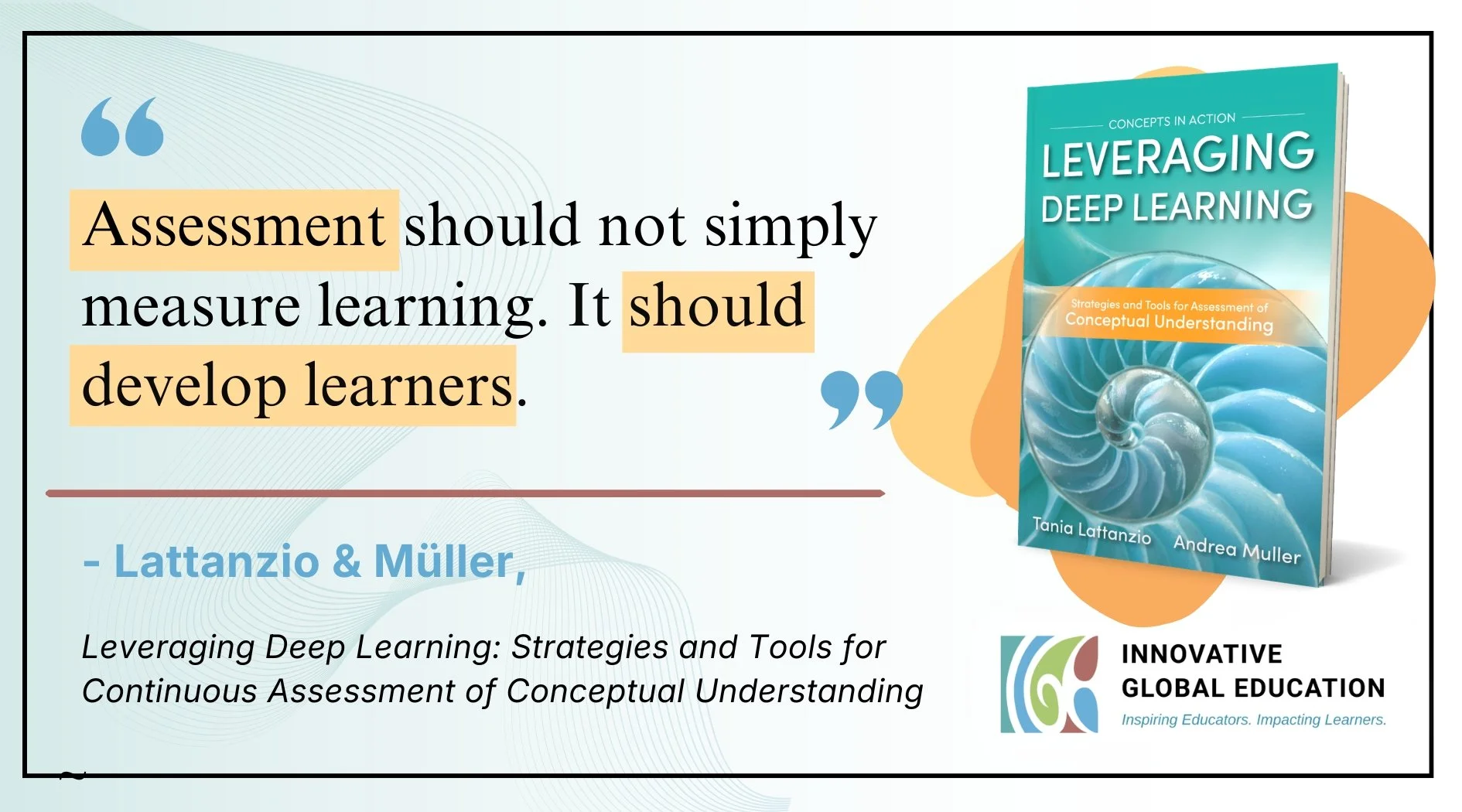
It is a question that has become increasingly important in my work and one that sits at the heart of our book, Leveraging Deep Learning: Strategies and Tools for Continuous Assessment of Conceptual Understanding. Throughout the book Andrea Müller and I argue that assessment should not simply measure learning. It should develop learners.
“This book places the emphasis on learners as being assessment capable and calls on educators to actively involve students in the assessment of their and their peers’ learning.”
The more I work alongside teachers, the more convinced I become that developing assessment-capable learners is not another assessment strategy. It is a way of thinking about learning.
One of the ideas I return to regularly when working with schools is that
the person doing the thinking is the person doing the learning.
We know this when we design inquiry. We know this when students investigate authentic problems. We know this when learners collaborate, debate, create and make meaning together. Yet when it comes to assessment, we often unintentionally shift the thinking back to ourselves.
As teachers, we naturally want to help. At times, we clarify expectations, identify strengths, explain misconceptions and provide feedback. These are all important parts of teaching. But if we are doing most of the thinking about the assessment, how do students learn to think like assessors? If we are always interpreting the success criteria, identifying the evidence of learning and determining the next steps, when do learners develop those capabilities for themselves?
Assessment capability is about gradually developing learners who understand what quality looks like, recognise evidence of learning, monitor their own progress and make informed decisions about where they need to go next.
Shirley Clarke reminds us that
“The most important person in the assessment process is the pupil.”
I have always loved the simplicity of Shirley Clarke's words because they remind us who assessment is really for. This thinking is reinforced by the work of John Hattie, Royce Sadler, Dylan Wiliam and Susan Brookhart, whose research consistently highlights the importance of students understanding success, evaluating evidence, using feedback and becoming increasingly active participants in their own learning.
When Learning Becomes a Mystery
One of the challenges I see in many classrooms is that we sometimes assume students understand what success looks like simply because we have shared the learning intention or provided success criteria. Yet many learners don't.
Words such as describe, analyse, justify, evaluate and explain often appear in classrooms as though their meaning is obvious. Even when students understand the individual words, they may not understand what those words look like in practice or how they apply within a particular discipline.
If learners do not understand the success criteria or what successful learning looks like, learning can become a mystery.
Students are left trying to work out what the teacher wants rather than understanding what quality looks like and how they can achieve it. They become dependent on teacher judgement because they have not been taught how to judge quality for themselves.
“Our goal should never be for students to guess what success looks like. Our goal should be to make the pathway to success visible.”
When students understand the pathway, they become far more capable of monitoring their own progress, recognising quality and making informed decisions about what to do next.
Rethinking Continuous Assessment
Perhaps this is where continuous assessment is often misunderstood. Continuous assessment is not about more tests, more quizzes or more grades. It is about continually using evidence to inform learning.
Rather than asking 'How did I do?', students begin asking: What evidence do I have? What does quality look like? What am I doing well? What do I need to improve next? Those questions position learners as active participants rather than passive recipients of assessment.
“Continuous assessment honours the learner and their journey. It is about putting the learner at the centre.”
Continuous assessment is not something that happens before learning. It is not something that happens after learning. It happens throughout learning. It is through this continual process of noticing, reflecting, adjusting and responding that students gradually become assessment-capable learners.
A Shift in Thinking
Developing assessment-capable learners does not happen overnight, nor does it happen by handing students a rubric before an assessment task. It requires intentionally teaching students how to understand the language of learning, recognise quality and use success criteria throughout the learning process.
If developing assessment-capable learners is our goal, then the next question becomes obvious.
“How do we intentionally develop those capabilities?”
Developing these capabilities doesn't happen accidentally. Like any other aspect of learning, they need to be intentionally taught.
In my next article, I'll share a practical process that I've been exploring with schools to help students understand the language of learning, define quality and use success criteria throughout learning so they increasingly become active participants in the assessment process.
References
Brookhart, S. M. (2017). How to Give Effective Feedback to Your Students (2nd ed.). ASCD.
Clarke, S. (2014). Outstanding Formative Assessment: Culture and Practice. Hodder Education.
Hattie, J. (2023). Visible Learning: The Sequel. Corwin.
Lattanzio, T., & Müller, A. (2025). Leveraging Deep Learning: Strategies and Tools for Continuous Assessment of Conceptual Understanding.
Sadler, D. R. (1989). Formative assessment and the design of instructional systems. Instructional Science, 18(2), 119–144.
Wiliam, D. (2011). Embedded Formative Assessment. Solution Tree.
Further Reading & Professional Learning
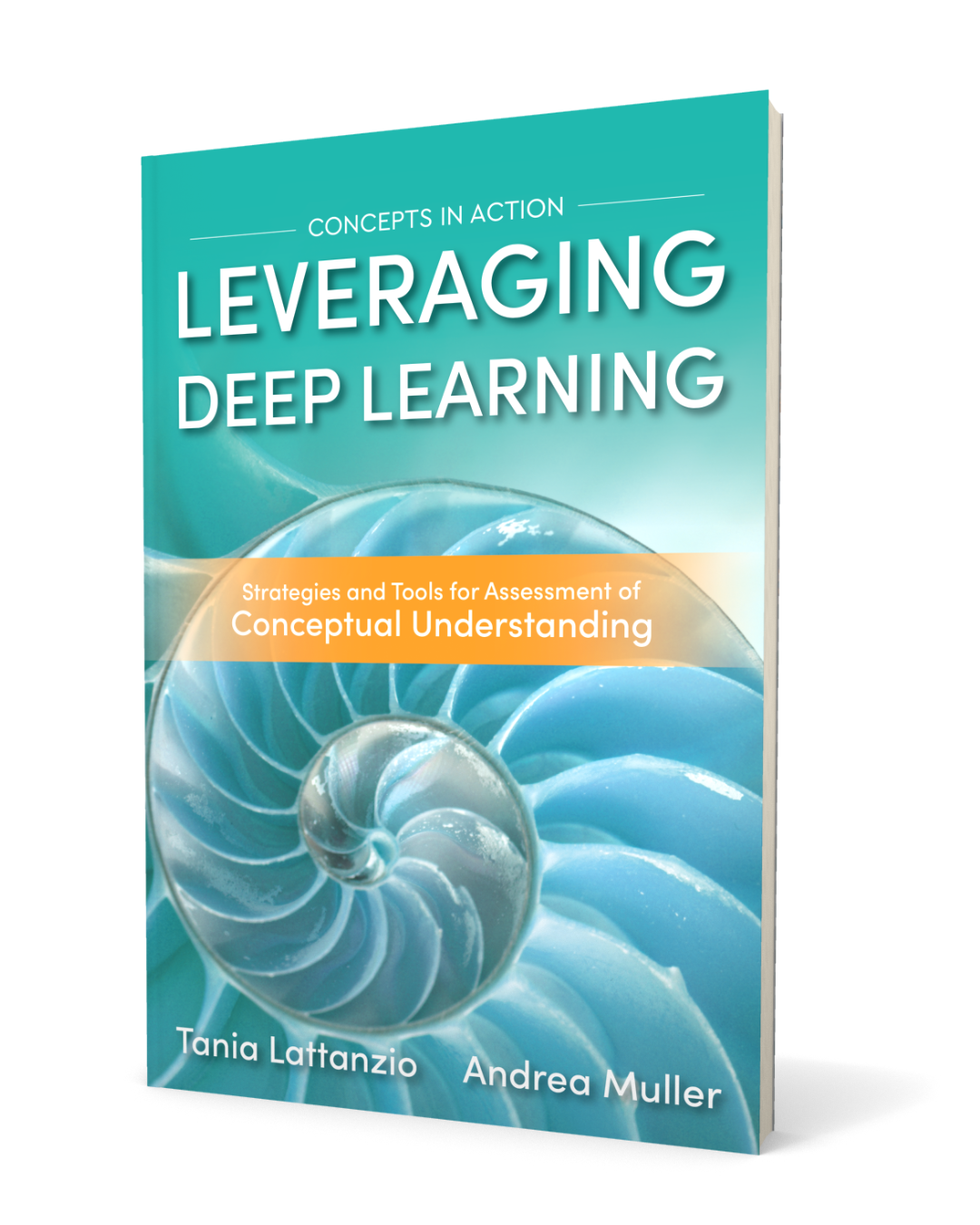
If you found this conversation around curiosity, inquiry, and conceptual understanding helpful, I highly recommend exploring our book:
Leveraging Deep Learning: Strategies and Tools for Assessment of Conceptual Understanding - A thoughtful resource for educators looking to move beyond surface-level engagement and design learning experiences that foster deeper thinking, transfer, and meaning-making.
You can also explore more articles, latest workshops, consulting services, and professional learning opportunities through Innovative Global Education:
Visit our website: https://www.innovativeglobaled.org
Get in touch: info@innovativeglobaled.org
Subscribe to our newsletter to stay connected with future reflections and resources on inquiry, learning design, student agency, and more.