

At the recent EARCOS Leadership Conference in Bangkok, I had the pleasure of presenting alongside Deidre Fischer on From Mission to Learning: Embedding School Values Through Conceptual Curriculum Design.
We began with a question for school leaders:
If I followed a learner through your school for a week, where would I see your school's mission and values reflected in their learning?
It is a question that invites us to look beyond the statements displayed on our walls, published on our websites, or included in strategic plans.
Most schools have carefully considered mission and vision statements. They communicate what the school believes about learning, the kind of community it aspires to be, and the qualities it hopes learners will develop.
But how do these beliefs translate into what students actually experience and understand?
What if our school's mission was not simply something we displayed, but something that helped shape the curriculum we designed?
Creating Coherence Through a Conceptual Framework
One of the ideas we explored during our EARCOS session was how a school's mission and values might inform the development of enduring conceptual themes that provide coherence across the curriculum.
Rather than creating a separate theme for every value, schools can identify broader conceptual themes that encompass what they believe matters.
For example, a school that values inclusion, belonging and community might identify Identity and Belonging as an enduring conceptual theme.
This could be explored in different ways across the curriculum:
In the early years, learners might investigate how relationships and shared experiences contribute to a sense of belonging.
In social studies, learners might explore how identity is shaped by culture, communities and experiences.
In literature, learners might examine how authors represent identity and belonging through characters and their relationships.
Another school that values curiosity, creativity and adaptability might identify Change and Possibility as an enduring conceptual theme.
Learners might explore patterns of change in mathematics, investigate how living things respond to changing environments in science, or consider how innovation creates possibilities and challenges for societies.
In both examples, the conceptual theme provides a connection between the school's values and the learning taking place across different disciplines.
Importantly, the themes are not additional content to teach. They provide a conceptual foundation through which existing curriculum can be explored.
Coherence Does Not Mean Repetition
For a conceptual framework to be meaningful, the themes need to be broad enough to have relevance across different ages, disciplines, and contexts. They must also be rich enough for understanding to deepen over time.
However, this does not mean every theme needs to be explored in every subject or every year level.
The connections must be authentic rather than forced.
For example, learners might explore Change and Possibility in the early years by noticing and describing changes in their immediate environment. In later years, they might investigate patterns and causes of change in scientific or historical contexts. As their understanding develops, they may consider increasingly complex relationships between change, uncertainty, innovation and possible futures.
The theme remains relevant, but the contexts, disciplinary perspectives and sophistication of thinking evolve.
This is where conceptual themes can create coherence across a learner's educational journey.
Learners have opportunities to revisit significant ideas in different contexts and at different points in their schooling, building on, extending and sometimes reconsidering their previous understandings.
Coherence is therefore not about repeating the same learning. It is about creating meaningful connections that allow understanding to develop over time.
Making the Conceptual Connections Visible to Learners
As learning takes place within the enduring conceptual themes identified from a school's mission and values, it is important that learners recognise these connections for themselves.
This means intentionally helping students understand how what they are learning connects to the school's mission and values, while also providing opportunities to recognise how these important ideas relate to other contexts and previous learning experiences.
For example, a school that values collaboration, community and responsibility might identify Relationships and Interdependence as an enduring conceptual theme. Within mathematics, learners investigating patterns and relationships might explore how changing one variable influences another. Teachers could help learners recognise how this connects to the broader idea of interdependence and invite them to consider how their understanding of relationships connects to previous investigations of ecosystems, communities or other systems.
Through these connections, learners begin to recognise how the important ideas underpinning their school's mission and values extend beyond individual subjects and learning experiences.
This requires teachers to intentionally draw attention to these connections, while creating opportunities for learners to identify connections themselves, revisit previous understandings and extend, refine or reconsider their thinking.
Coherence is not simply something we design into the curriculum. It is something learners need to recognise and experience as their understanding develops across different contexts and over time.
From Statements of Intent to Learning
A conceptual framework grounded in a school's mission and values provides a shared direction for curriculum design while allowing flexibility across disciplines and year levels. More importantly, it creates opportunities for learners to develop understandings that connect their learning to the school's broader educational purpose.
It also raises some important questions for school leaders and educators:
What are the enduring ideas that sit at the heart of our school's mission and values?
How might these ideas provide coherence across our curriculum?
Are the conceptual themes broad enough to be meaningfully explored across ages and disciplines?
Where might learners authentically revisit and deepen their understanding of these ideas over time?
How are we helping learners recognise connections between their current learning, previous understandings and the enduring conceptual themes that reflect our school's mission and values?
Perhaps one of the most important questions we can ask is not simply whether our school has a clear mission and shared values, but whether those beliefs are evident in what learners experience, understand and are able to do.
Our mission and values communicate what we believe matters. A coherent conceptual curriculum provides opportunities for learners to develop increasingly sophisticated understandings of those beliefs over time.
~ Tania Lattanzio | Innovative Global Education
This reflection draws on ideas explored with Deidre Fischer during our presentation at the EARCOS Leadership Conference, Bangkok, October 2026.
Further Reading & Professional Learning
If you found this conversation about curiosity, inquiry, and conceptual understanding helpful, I highly recommend exploring our book:
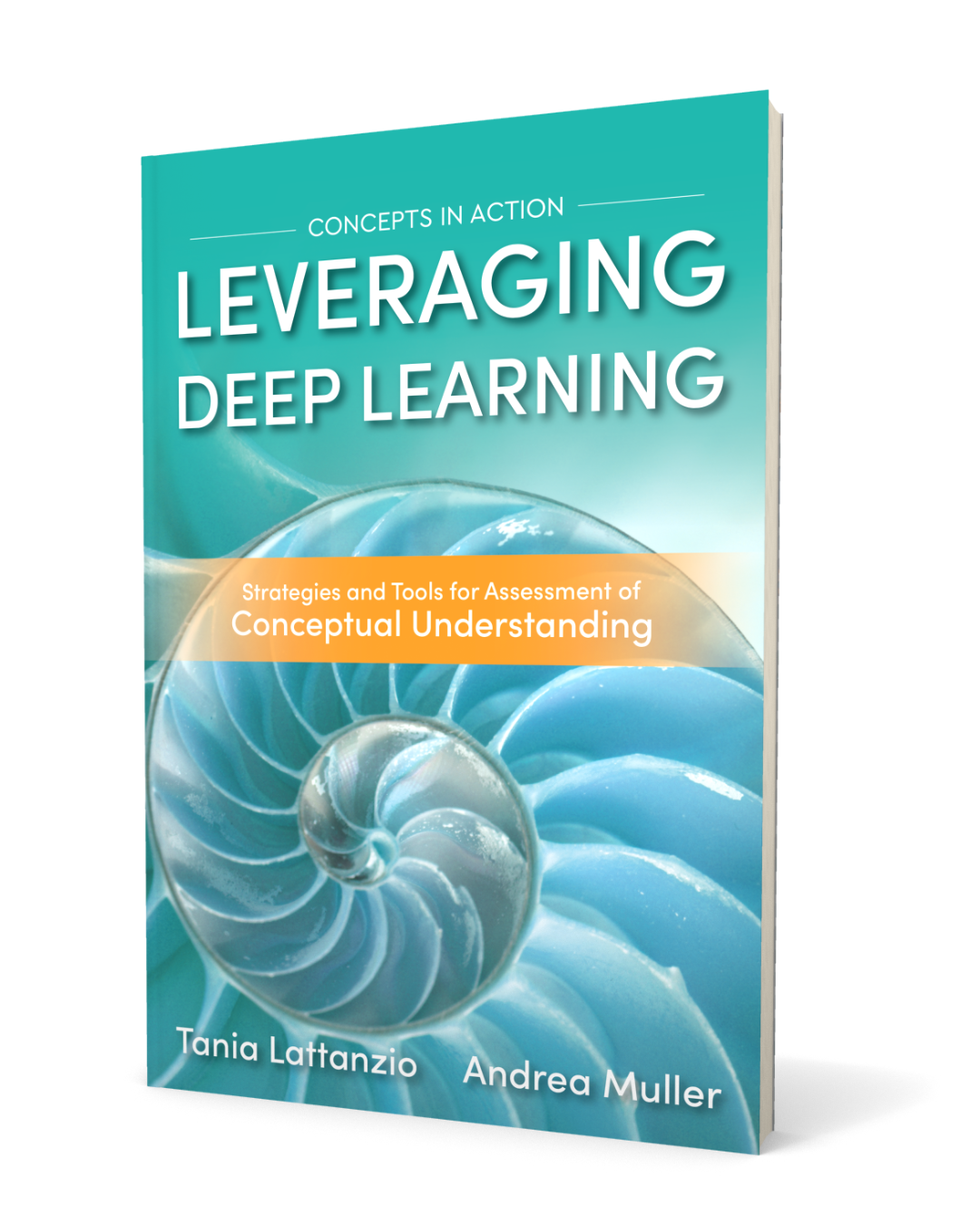
Leveraging Deep Learning: Strategies and Tools for Assessment of Conceptual Understanding - A thoughtful resource for educators looking to move beyond surface-level engagement and design learning experiences that foster deeper thinking, transfer, and meaning-making.
You can also explore more articles, the latest workshops, consulting services, and professional learning opportunities through Innovative Global Education:
Visit our website: https://www.innovativeglobaled.org
Get in touch: info@innovativeglobaled.org
Subscribe to our newsletter to stay connected with future reflections and resources on inquiry, learning design, student agency, and more.