
Assess to Progress: Co-constructing Understanding Through Continuous Assessment
Over two days at an EARCOS weekend workshop at Mont’Kiara International School (10–11 January 2026), I had the opportunity to work alongside teachers to explore assessment not as a moment at the end of learning, but as an ongoing process that informs teaching, learning, and next steps.
From the outset, I was reminded how powerful it is to experience assessment rather than simply talk about it. Rather than beginning with definitions or frameworks, teachers were immersed in the kinds of practices we want learners to encounter in classrooms, practices that invite thinking, surface understanding, and make learning visible over time.
Invitations as entry points into thinking
We began with a range of invitations connected to assessment. These were intentionally designed to tap into prior knowledge, surface beliefs, and prompt reflection. Teachers engaged in sorting tasks, responded to prompts, made connections, and discussed multiple perspectives.
What struck me early on was how deliberately collaborative these invitations were. Teachers worked in small groups to talk through ideas, challenge assumptions, and co-construct shared understandings of assessment. Meaning was not given; it was built together through dialogue and collective sense-making.
As one participant noted, there was a “great mix of pedagogical information and real-world application,” and the pacing of the workshop allowed time to think deeply rather than rush to conclusions.
As these conversations unfolded, I found myself reflecting on how rarely we slow down enough to ask what teachers and students already understand about assessment.
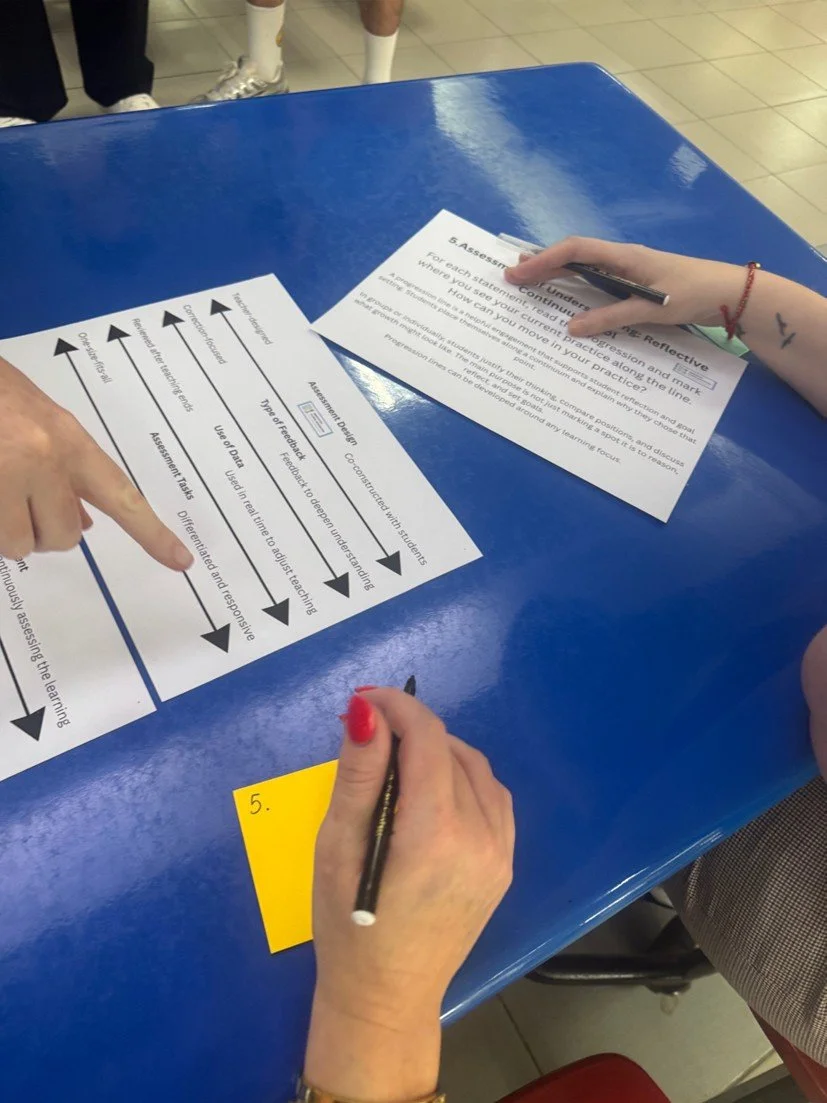
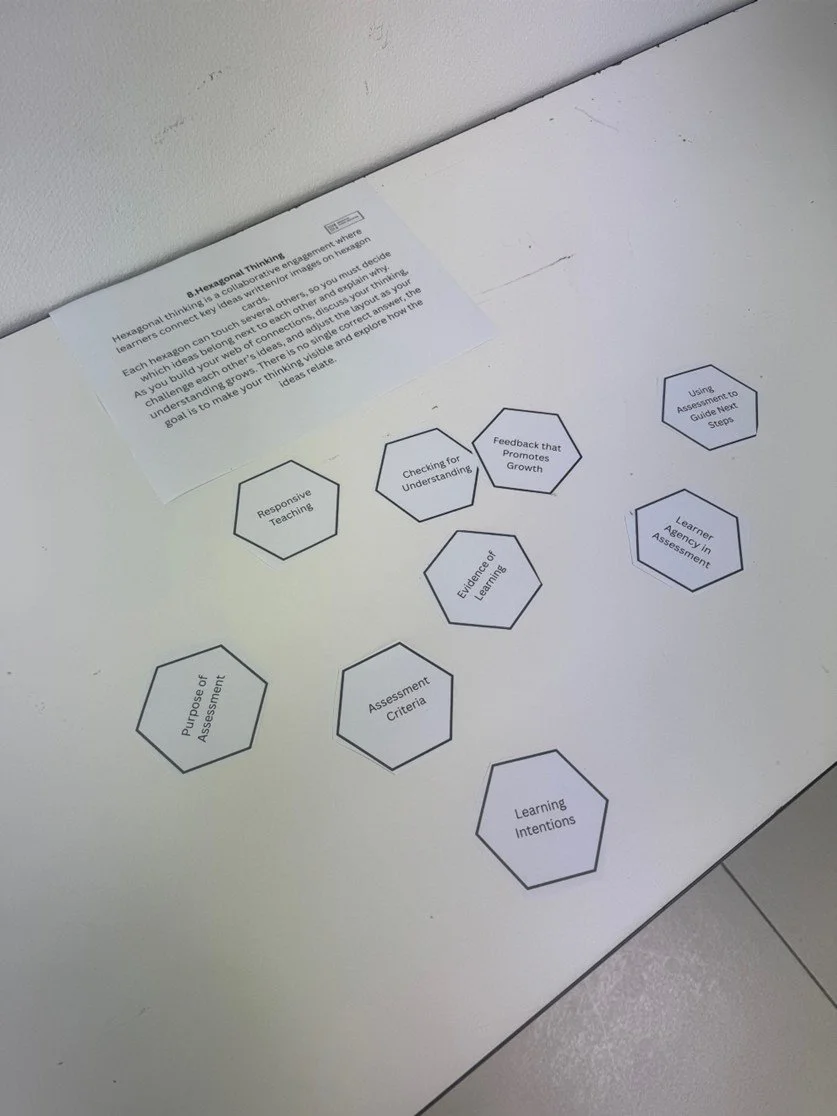
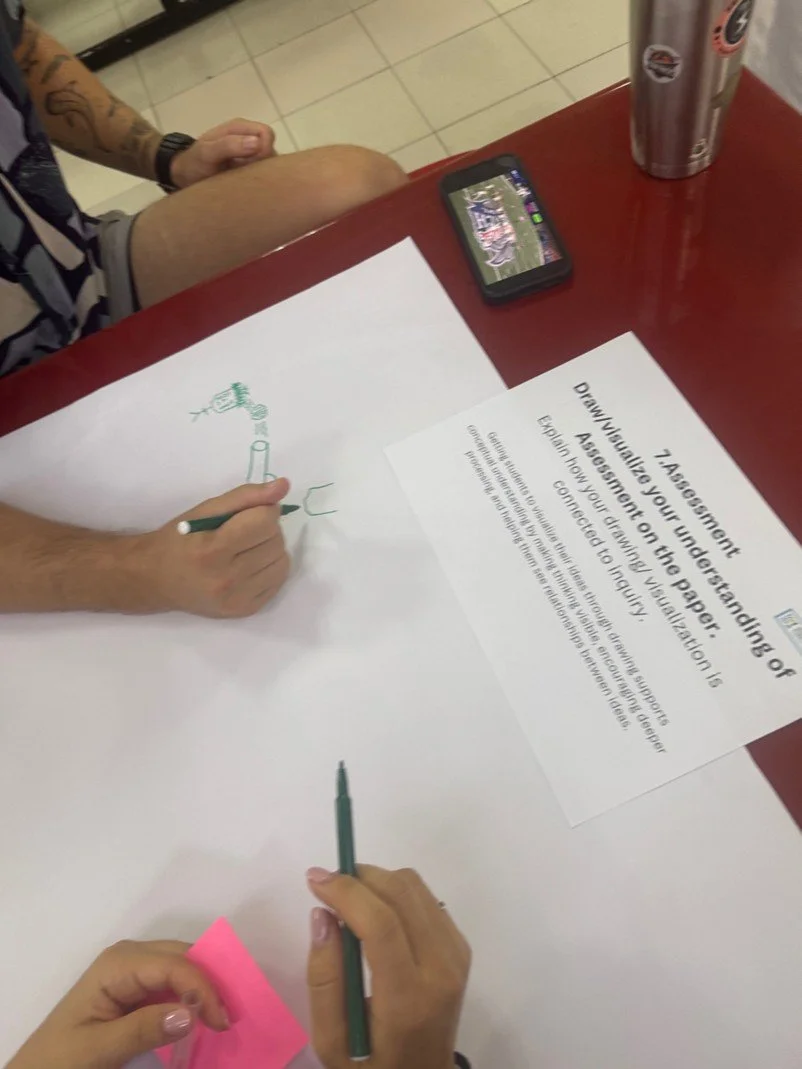
Teachers engaging in invitations as a way to explore and challenge ideas about assessment.
Each invitation acted as a diagnostic moment, enabling participants to consider what they already understood about assessment, the questions they had, and where misconceptions or tensions existed.
One continuous assessment tool, revisited over time
A deliberate design decision across the workshop was that each group selected one continuous assessment tool that they would revisit throughout the two days. This was not accidental. It was intended to model continuous assessment as the ongoing collection and use of evidence to understand learning, inform feedback, and guide next steps rather than assessment as a one-off event.
After each engagement, teachers returned to their chosen tool to record what they understood, refine ideas, and add new learning. Often this was done in a different colour, making shifts in thinking visible over time.
Watching teachers return to the same tool made me pause. What might shift if we stopped treating assessment as something separate from learning? What could change if evidence was revisited, refined, and used rather than collected and stored?
This experience resonated strongly with one teacher who shared:
“Thank you for this lovely workshop. It has given me valuable insights on the research behind continuous assessment, useful tools to use in my own classroom, and some confidence to try them out.”
This was intentional modelling. Teachers experienced what it feels like to track thinking, notice growth, and use evidence over time so these practices could be transferred directly into classroom learning.
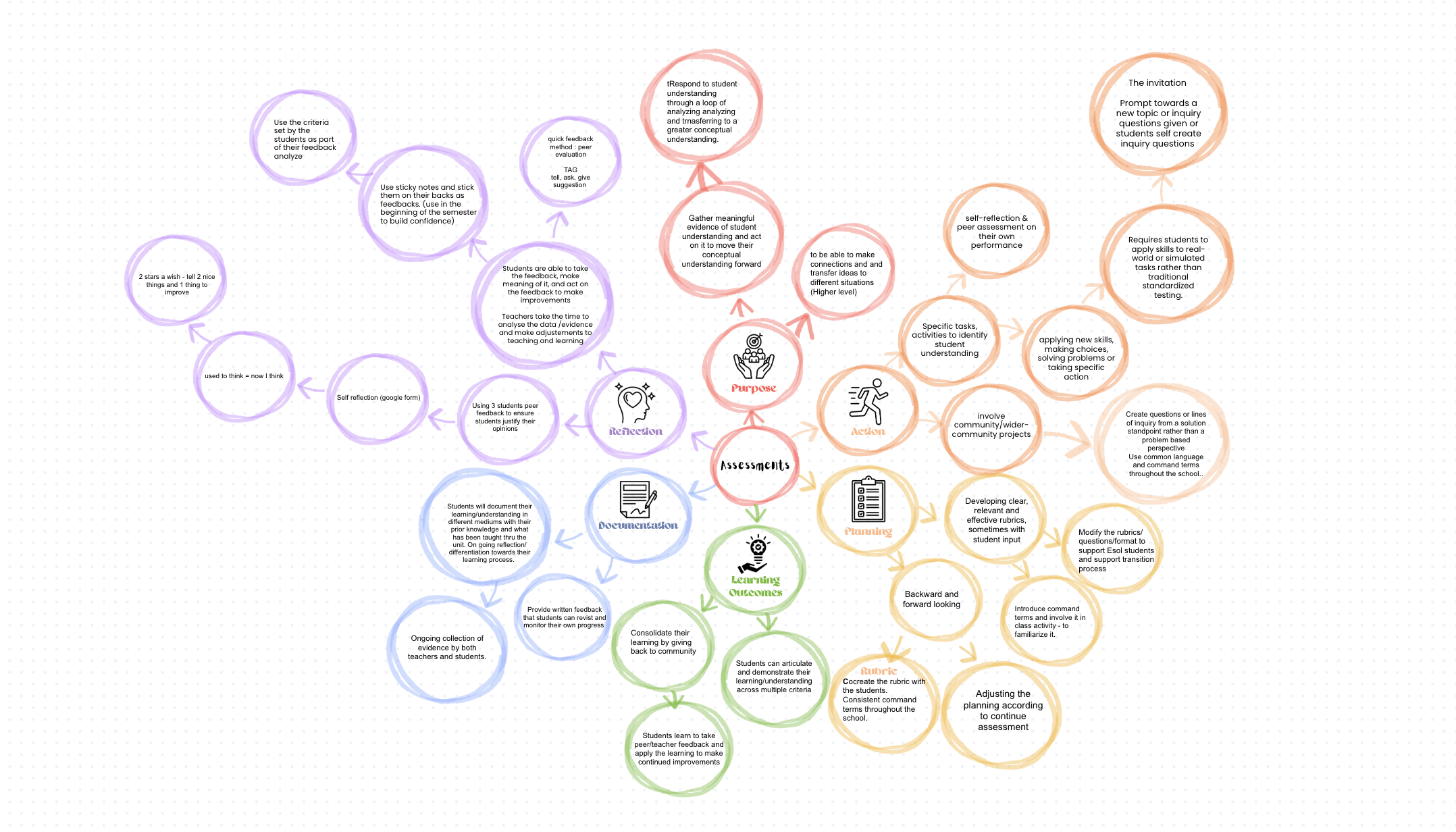
Teachers revisiting and adding to a shared assessment tool to make learning visible over time
Assessment-capable learners and self-adjusters
A core focus throughout the workshop was what it means for learners to be assessment capable. Together, teachers unpacked how students become assessment capable when they understand where the learning is heading, recognise quality, know where they are in their learning, and can identify next steps.
Feedback was positioned not as something given at the end, but as information learners use to reflect, adjust, and move forward. As these discussions unfolded, I kept coming back to the role of feedback in learning.
When feedback is given but not used, what purpose does it serve? What becomes possible when learners are supported to use evidence and feedback to adjust their own thinking and strategies?
This naturally led to the idea of learners as self-adjusters, students who don’t simply receive feedback, but actively use evidence to make decisions about how to improve. Through role-based activities and collaborative discussions, teachers explored the shift from assessment being teacher-driven to assessment becoming a shared responsibility.
One participant captured this shift clearly:
“My biggest takeaway was how I can move from one-off assessments and reflections to continuous assessment, while making learners more active participants in the process.”
Val Quaye, Alice Smith Secondary, Computer Science
Another teacher reflected on the value of experiencing these ideas in practice, noting:
“The practical learning experiences were especially useful, as they helped me see how I could incorporate these approaches into my lessons.”
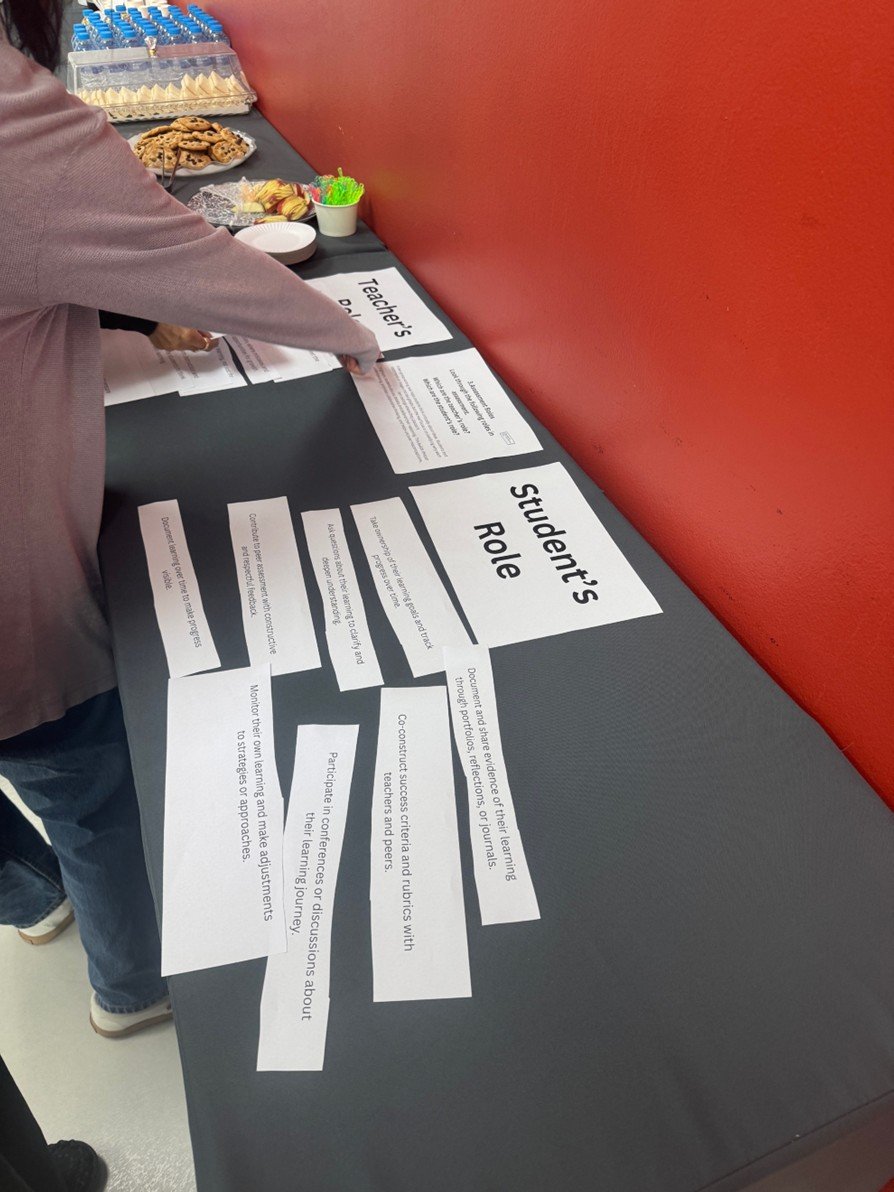
Teachers involved in collaborative discussions about the roles of teachers and students in the assessment process.
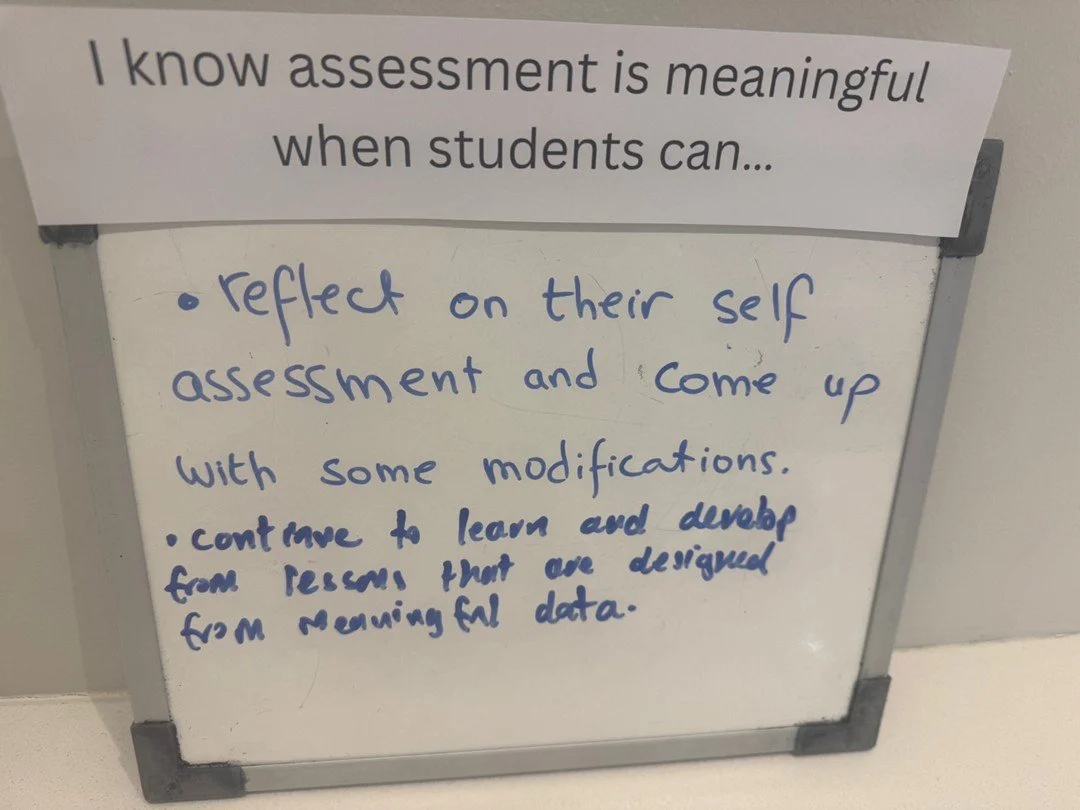
Teachers exploring what is meaningful assessment for students
The “So what?”: transfer and application
As the workshop progressed, the question I kept returning to was a simple one: So what? If understanding is developing, how do we design opportunities for that understanding to be used?
Teachers explored how continuous assessment supports transfer and application, helping learners move beyond task completion towards meaningful use of concepts and skills. Multiple concrete examples were shared such as; tools, prompts, structures, and routines that could be lifted and adapted immediately into classroom practice.
One participant reflected that the strong discussions around continuous assessment, authentic assessment, and feedback were “the most valuable and meaningful,” because they helped connect assessment directly to learning that matters.
These conversations prompted further reflection for me. How often do we design assessment with transfer in mind? Where might we be unintentionally limiting opportunities for learners to apply understanding in new or unfamiliar contexts?
Where are we providing students with varied ways to demonstrate their understanding?
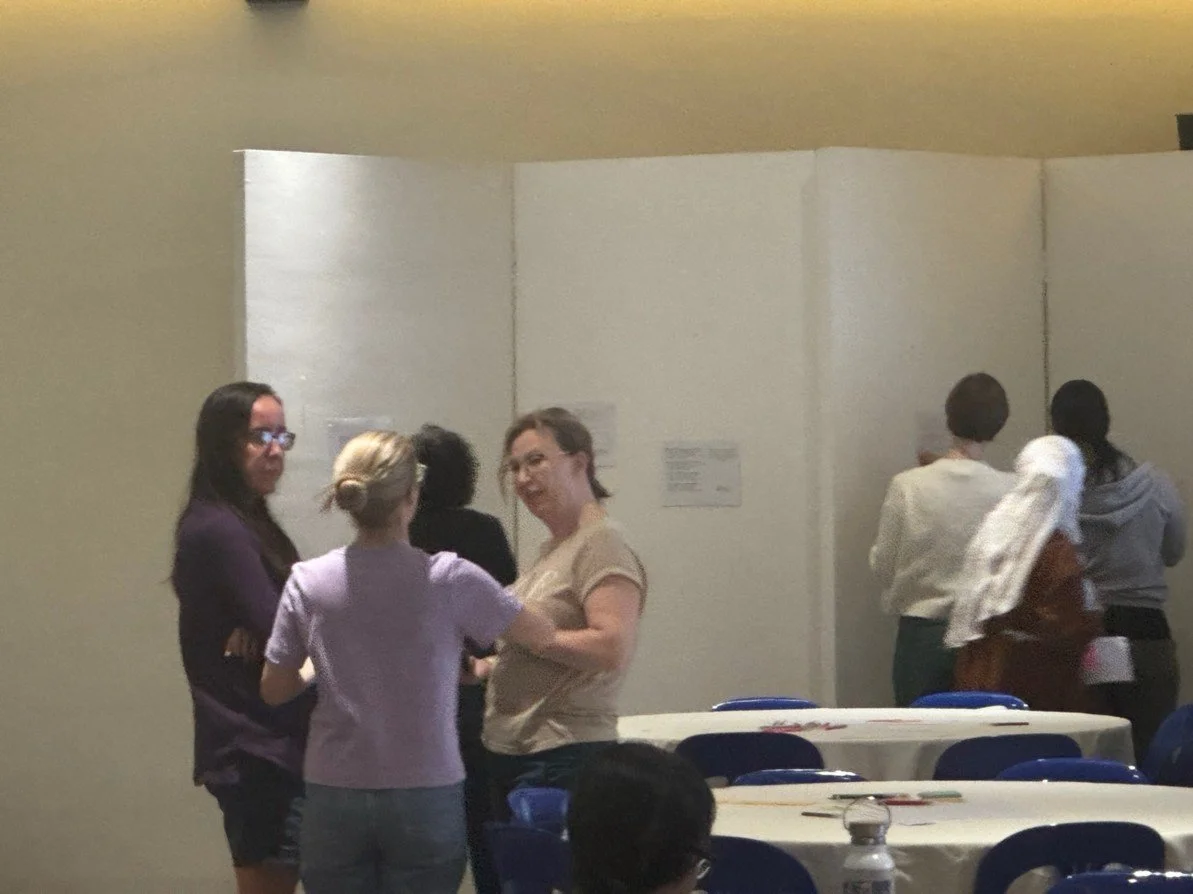
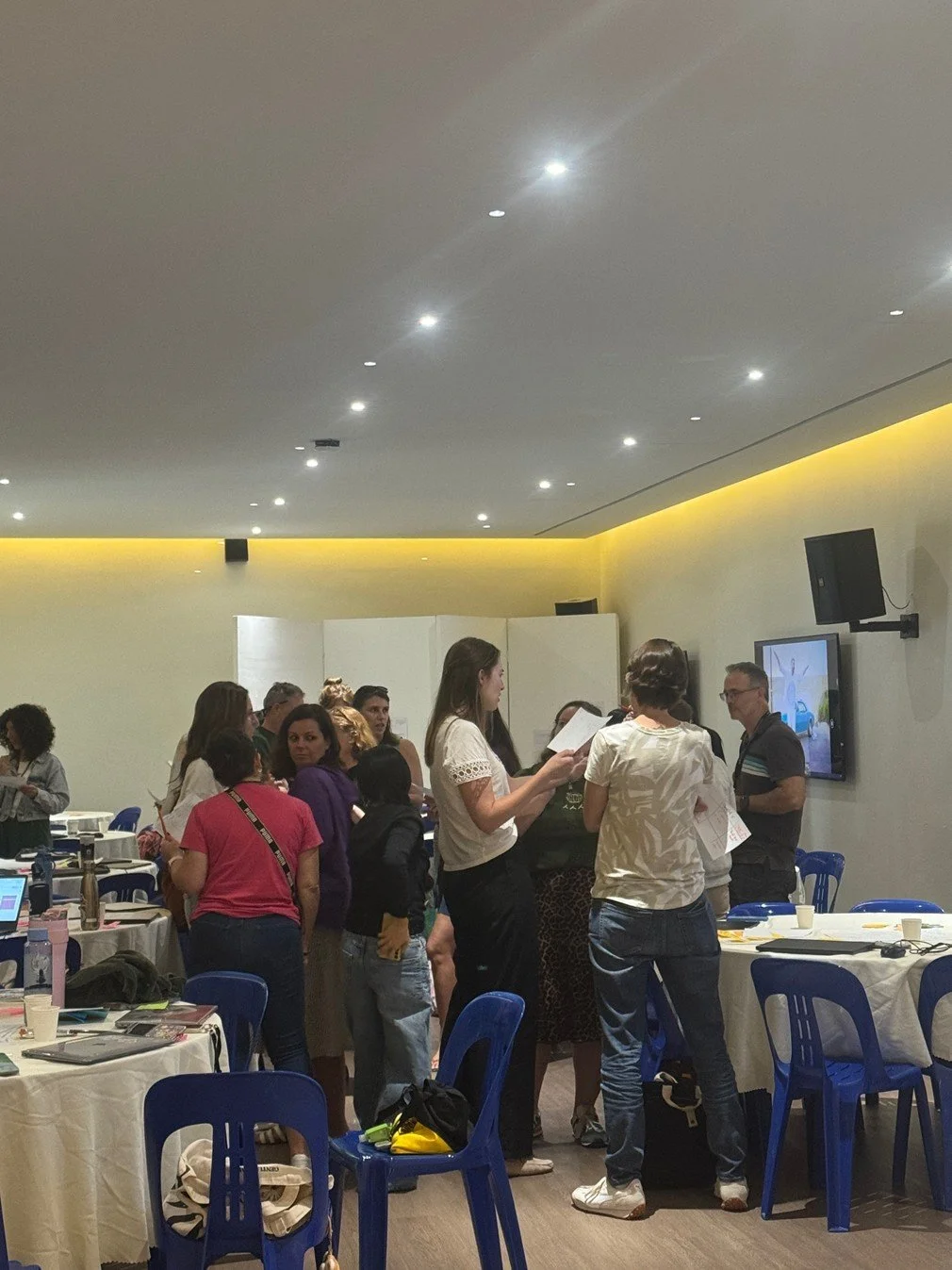
Teachers reflecting together on how assessment practices can be transferred directly into classrooms.
From experience to classroom practice
By the end of the two days, teachers had not only explored new ideas, but had lived the experience of continuous assessment. They had engaged in invitations, gathered evidence, revisited understanding, used feedback, and adjusted their thinking over time.
One participant summed up the experience simply:
“Time well spent. Thank you for all the practical tools. My team and I are really looking forward to implementing what we’ve learned.”
As I reflected on the workshop, I was reminded that continuous assessment is not about doing more or adding complexity. It is about noticing learning, using evidence thoughtfully, and creating conditions where learners, both teachers and students, can reflect, adjust, and grow.
It leaves me continuing to wonder how small, intentional shifts in assessment practice can lead to greater clarity, stronger learning conversations, and more assessment-capable, self-adjusting learners.
The core ideas from this workshop are deeply connected and explored in the book Leveraging Deep Learning: Strategies and Tools for Conceptual Understanding available at this link:
https://elevatebooksedu.com/leveraging-deep-learning
If this reflection has prompted you to think differently about assessment, feedback, or how learning is made visible over time, I’d love to continue the conversation.
Interested in joining me in a similar professional learning experience?
I’ll be facilitating Leveraging Deep Learning: Assessment of Conceptual Understanding in the PYP at the American International School of Guangzhou, China.
This one-day workshop invites educators to live the experience of continuous, responsive assessment and to leave with practical strategies they can apply immediately in their own classrooms and teams.
📍 American International School of Guangzhou
📅 Saturday, April 11, 2026
👉 Book your spot here:
https://www.innovativeglobaled.org/events/leveragingdeep-learning-assessment-of-conceptual-understanding-in-the-pyp
If this reflection has prompted you to think differently about assessment, feedback, or how learning is made visible over time, I’d love to continue the conversation.
Tania Lattanzio
Innovative Global Education
tania@innovativeglobaled.org